If you're looking for a little anonymity and security when signing up for download links or invite codes, a disposable email service is a good option. Instead of providing one of your working email addresses, just grab a meaningless temporary one from any of these sites and keep your identity hidden.
These five sites all provide RSS feeds for your address, which is handy. No need to return to the site after registration, just subcribe with your favorite newsreader.
MailCatch - Choose your own address or roll the dice. MailCatch also provides an iGoogle gadget and creates a subdomain (using your address) for quick access to your web inbox. MailCatch also provides temporary forwards, and they've got an FAQ and forums.
MyTrashMail - Offers password protected temporary accounts in addition to the traditional public variety. Note that the Firefox "toolbar" they offer requires you have the Google toolbar installed first. FAQ and about links are prominently displayed.
FilzMail - Sports a clean interface featuring puffy, web 2.0 images. Create your own address or generate a random one and messages are available for 24 hours (which can be extended).
Incognito Mail - The option for minimalists. Choose or generate your address, and it's valid for 60 minutes. No FAQ or TOS is posted. There are a number of other services that look very similar to Incognito Mail, offering different time limits.
DodgeIt - Ok, maybe this is the one for minimalists. You pick the address (no random generator), you check for messages - they're deleted after seven days.
Do you use a different service? Share it with us, but stay on topic - make sure it supports RSS!
[Via: Download Squad ]
[Tag: anonymity, anonymous, disposable, mail, privacy ]
5 disposable email services with RSS support

Melt Mail provides free, disposable email forwarding

We've looked at other disposable email services (like my list of 5 with RSS support) before. Melt Mail is a nice alternative to other disposable account services.
Many require you return to their site to check for messages, but Melt Mail lets you work with any real email address.
Melt Mail works with your existing email, setting up a temporary forward @meltmail.com. You've got four time periods to choose from - three, six, 12, or 24 hours. After that, your address expires and forwards from it to your real account cease.
Once your address has been created, you can choose to pop up a small reminder window that displays your address and an expiration countdown.
One source of concern I have with the service is the lack of a privacy statement. If you're going to use Melt Mail (or a service like this), check for one before signing up. Who's to say your real address won't end up on someone's mailing list.
Melt Mail is a slick service, I'll just stick to using it with my "registration" gMail account.
[Via: Download Squad ] [Tag: disposable, email, forward, privacy ]
The Internet Archive, busy protecting us from ourselves
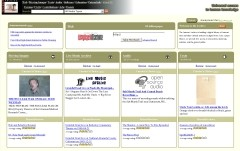 We don't like to make political statements too often here at DLS. It just seems a lot less complicated to fight over software, or whether or not something is Web 2.0, or pirates and ninjas. Every once in a while, though, something comes up that's just a little too out of line not to mention.
Wired reports that back in November, the FBI paid a visit to The Internet Archive and served founder Brewster Kahle with a National Security Letter. The NSL (.pdf link, be warned) is a funny sort of document. It is a subpoena that can be issued without a judge's watchful eye. It usually comes with an order to not tell anyone that the person in question has received it, excepting, of course, their lawyer. So Kahle couldn't tell board members, or his staff, or his teddy bear without legal repercussions.
NSLs aren't really new, but they've blossomed since the USA Patriot Act was enacted. According to Wired, though the FBI guidelines don't encourage frequent use, Congressional audits and the FBI itself reveal that it is likely that hundreds of thousands have been issued in the past seven years. It's likely, because, you know, the FBI doesn't actually seem to track how many they've used. Oh, whoops.
The other dimension to this drama is that the Internet Archive is more of a library than an ISP/communications provider. It seems, in light of that, that the NSL used was actually not the proper document to request the sort of things it was requesting from that institution. Whoops again.
This week, the government and The Internet Archive reached a settlement in regards to the NSL issue. The issued NSL is officially off the table. The Internet Archive can't say anything about what the information was that got the FBI so riled up in the first place.
Seeing that the Internet Archive archives public information, that anonymous browsing is allowed, and all that's required to sign up for an account is an email address, username and password (Kahle says IP addresses aren't logged) it doesn't seem as though the FBI will really find much helpful information. They will find a whole lot of Grateful Dead recordings, if that's any consolation.
[Via: LISNews ]
[Tag: ]
The Internet Archive, busy protecting us from ourselves
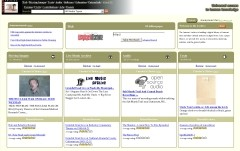 We don't like to make political statements too often here at DLS. It just seems a lot less complicated to fight over software, or whether or not something is Web 2.0, or pirates and ninjas. Every once in a while, though, something comes up that's just a little too out of line not to mention.
Wired reports that back in November, the FBI paid a visit to The Internet Archive and served founder Brewster Kahle with a National Security Letter. The NSL (.pdf link, be warned) is a funny sort of document. It is a subpoena that can be issued without a judge's watchful eye. It usually comes with an order to not tell anyone that the person in question has received it, excepting, of course, their lawyer. So Kahle couldn't tell board members, or his staff, or his teddy bear without legal repercussions.
NSLs aren't really new, but they've blossomed since the USA Patriot Act was enacted. According to Wired, though the FBI guidelines don't encourage frequent use, Congressional audits and the FBI itself reveal that it is likely that hundreds of thousands have been issued in the past seven years. It's likely, because, you know, the FBI doesn't actually seem to track how many they've used. Oh, whoops.
The other dimension to this drama is that the Internet Archive is more of a library than an ISP/communications provider. It seems, in light of that, that the NSL used was actually not the proper document to request the sort of things it was requesting from that institution. Whoops again.
This week, the government and The Internet Archive reached a settlement in regards to the NSL issue. The issued NSL is officially off the table. The Internet Archive can't say anything about what the information was that got the FBI so riled up in the first place.
Seeing that the Internet Archive archives public information, that anonymous browsing is allowed, and all that's required to sign up for an account is an email address, username and password (Kahle says IP addresses aren't logged) it doesn't seem as though the FBI will really find much helpful information. They will find a whole lot of Grateful Dead recordings, if that's any consolation.
[Via: LISNews ]
[Tag: ]
Freenet 0.7 released: Decentralized, anonymous publishing

Freenet is a tool that lets users publish pretty much anything online "without fear of censorship." The software stores your data on a decentralized, anonymous network of nodes made up of other Freenet users' computers. Freenet communications are encrypted and routed through those nodes, making it difficult for anyone to trace what you're doing. The service is useful for communication where a right to free speech is not guaranteed, and for privacy nuts and conspiracy theorists in countries where free speech is supposed to be a universal right, but may not be.
Freenet 0.7 was released this week, marking the first major update in three years. The latest version not only lets users upload data anonymously, but also lets users mask the fact that they're using the service at all by connecting only to computers of people you know and trust.
You can use the Freenet network to share files, publish websites, send emails, or communicate via message boards. The software is Java based and works with Windows, Mac, and Linux systems.
[Via: Slashdot ]
[Tag: ]
WordPress 2.5.1 security update
 The WordPress team has released version 2.5.1 of the blogging software. The new version, which comes nearly a month after the initial release fixes a slew of performance and interface bugs, but also includes a very important security update. It is highly reccommended that all WordPress 2.5 users update their installations as soon as possible, especially if you allow open-registration (for user comments or for multi-author blogs).
In addition to the aforementioned security patch, 2.5.1 contains a number of fixes to issues that have plagued some WordPress users for the last couple of weeks.
The highlights include
- Improvements to the Media Uploader
- Performance tweaks for the Dashboard and the Write and Comments pages
- TinyMCE has been updated
- Layout fixes for IE users
[Via: Download Squad ]
[Tag: ]